Active vs Passive Income: The Difference, With Clear Examples
2026-11-20
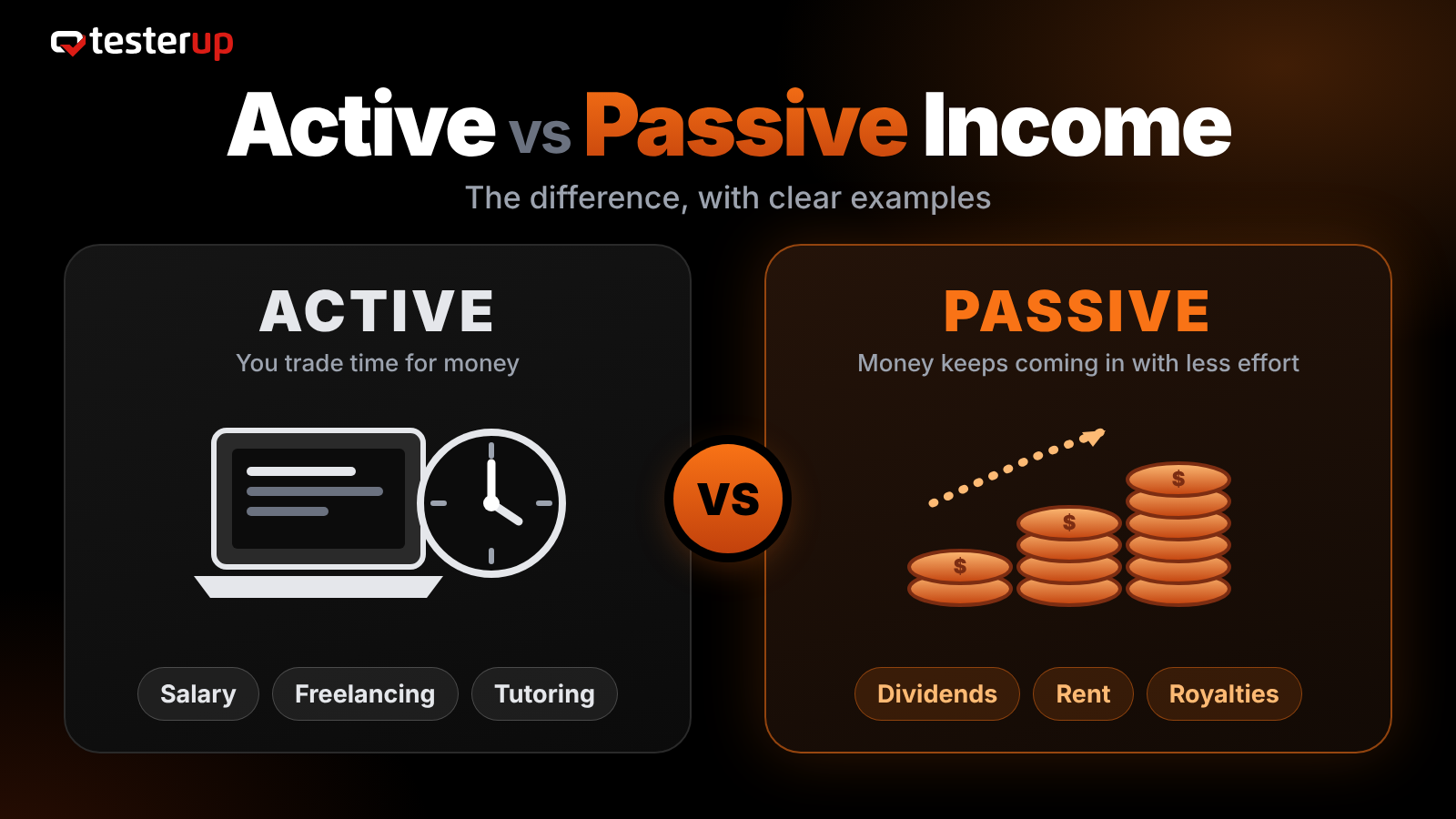
Active income is money you earn by doing the work, such as a salary, freelance projects or tutoring. Passive income is money that keeps coming in after the main work is done, such as rent, dividends or royalties. The key difference is whether your pay stops when you stop working.
Most people start with active income and build passive income over time. Below are clear examples of each, a side by side comparison, and where side hustles and rewards apps fit.
What is active income?
Active income is money you get in direct exchange for your time or effort. If you stop working, the money stops. It is the most common way people earn.
Examples of active income
-
A salary or hourly wage from an employer
-
Freelance work, such as writing, design or web development
-
Tutoring and coaching, paid per session
-
Gig work, such as delivery or pet sitting
-
Tips and commissions earned on the job
-
Rewards from completing tasks, such as answering paid surveys or reaching goals in games on a rewards app
What is passive income?
Passive income is money that keeps arriving after you have done the main work or made the investment. It is rarely zero effort. Most passive income needs time or money up front, plus some upkeep.
Examples of passive income
-
Rental income from a property or a spare room
-
Dividends from shares you own
-
Interest from savings accounts or bonds
-
Royalties from a book, music or photos you licensed
-
Digital products you make once and sell many times, such as templates or online courses
-
Ad income from a blog or video channel that keeps getting views
Where side hustles and rewards apps fit
Most side hustles are active income. You earn while you do the task, and earnings stop when you stop. That includes freelancing, gig work, surveys and rewards apps.
Testerup is a good example. It is a free rewards app, not an employer, that pays adults 18+ in the US, the UK and Canada (excluding Quebec) for reaching goals in games and apps they have not tried before. You see the reward before you start each offer. That makes it active income: what you earn will vary with the time you spend and the tasks you complete. You can cash out by PayPal, Visa virtual card or Amazon gift card.
The upside of active side hustles is speed. You can start today with no money up front, which is hard to do with most passive income. Many people use active side hustles from home to build savings, then put some of that money towards passive income later.
A note on tax terms
Tax agencies can use these words differently from everyday speech. In the US, the IRS treats passive activities as trade or business activities you do not materially participate in, and rental activities are generally passive even if you do take part (IRS). The UK and Canada have their own rules, so check with HMRC, the CRA or a tax professional before you rely on either label.
Active vs passive income compared
|
Active income |
Passive income |
|
|---|---|---|
|
How you earn |
Doing the work yourself |
From an asset or past work |
|
What happens if you stop |
Income stops |
Income usually continues for a while |
|
Up front cost |
Usually little or none |
Often time, money or both |
|
Time to first earnings |
Fast |
Often slow |
|
Ongoing effort |
Constant |
Lower, but rarely zero |
|
Examples |
Salary, freelancing, gig work, surveys, rewards apps |
Rent, dividends, interest, royalties, digital products |
Which should you focus on?
If you need money soon, start with active income. It pays quickly and needs no savings to begin. If you have savings or a skill you can package, passive income can add a second stream that keeps working in the background.
Most people do both: they earn actively, save part of it, and slowly build passive income. To find an active option that fits your week, read our guide on how to make money from home, which sorts 12 options by effort and pay.
FAQ
What is the main difference between active and passive income?
Active income stops when you stop working. Passive income keeps coming in after the main work or investment is done.
Is a side hustle active or passive income?
Most side hustles are active income, because you earn while you do the task. A side hustle can become partly passive if you build something that sells without you, like a digital product.
Is passive income really passive?
Rarely completely. Most passive income needs effort or money up front, plus some ongoing upkeep.
Is Testerup active or passive income?
Testerup is active income. It is a free rewards app, not an employer, and earnings vary with the time you spend and the tasks you complete.
Is rental income passive?
In everyday terms, yes. For US tax purposes, the IRS says rental activities are generally passive activities even if you materially participate, with some exceptions.
Start earning with your phone
Create a free account in under 30 seconds and get paid for testing apps and games.

Testerup is a platform where users can earn money by completing tasks, surveys and offers. Payouts are fast and secure via bank transfer.